Like most design fields, there are a series of guidelines, so to speak, that lay out how interior designers should approach a project using best practices of design concepts. More simply put, they are the “rules” of design. Perhaps you have once looked at a room and thought that something seems off, but you can’t exactly put your finger on it. These principles of interior design might be your guide to solving that mystery! Read on as we define these principles and how they apply to your home’s design.
Balance
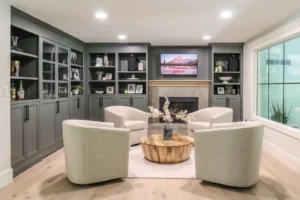
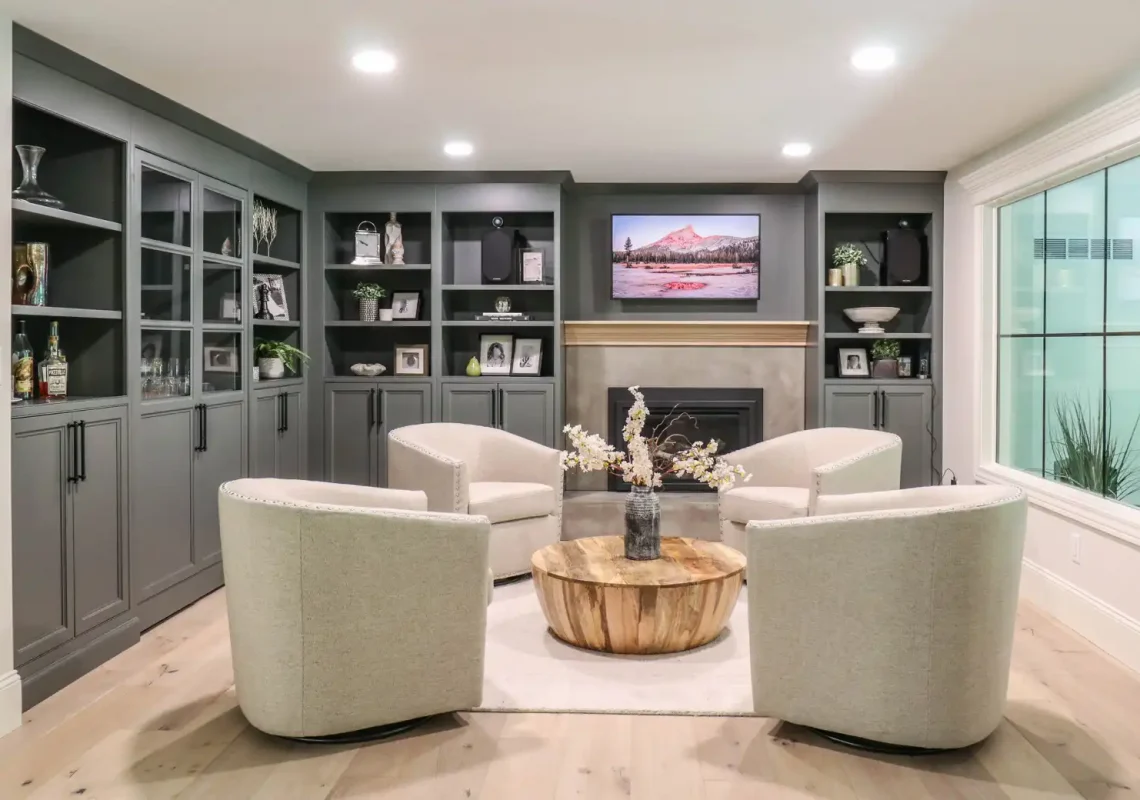
A balanced space is one that looks visually even. This does not mean that everything in a room is perfectly symmetrical, as asymmetry exists, and for good reason. The idea is being intentional with layout and placement, so that the visual weight is spread out. A symmetrical example of balance would be built-ins of the same size on either side of a fireplace. It makes sense visually, and the room feels balanced. Not everything has to be exactly equal in all circumstances to achieve balance, though. Within the same example of fireplace built-ins, you’ll notice asymmetry as well, this time within how shelves might be decorated. You’re probably not going to put the exact same items on each side to mirror one another, because that would be too much symmetry. Instead, you might place different items of the same height scattered on either side in order to achieve a visual balance that is satisfying but not completely matching.
A good test to determine if a space feels balanced would be to squint your eyes when viewing a space. Is there a specific spot of your blurred vision that is still demanding most of the attention? Does it seem like one side is missing something? Then you might be off balance. Try rearranging and squinting again until it feels more leveled.
Contrast
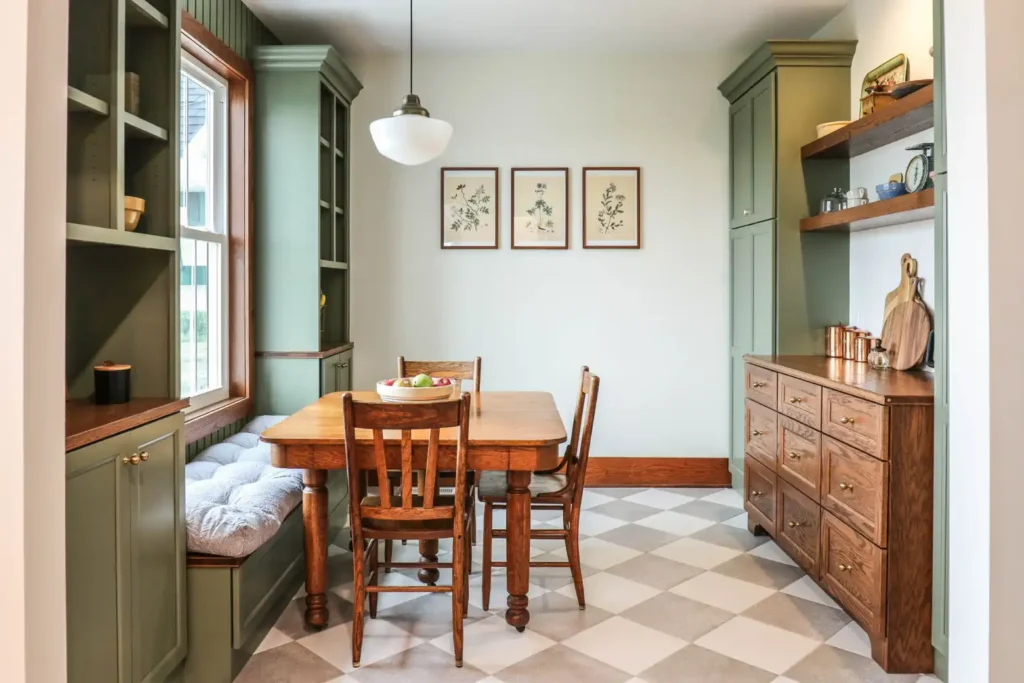
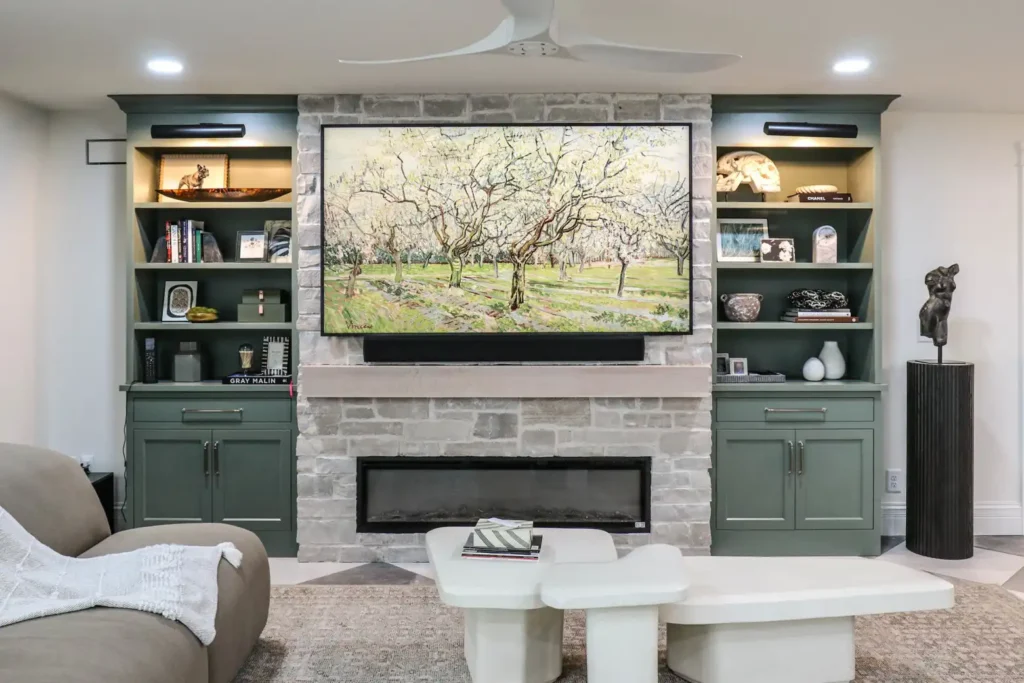
A design without any contrast might fall flat visually. Contrast refers to pairing contrasting colors, textures, or forms to play off one another. Think of pairing a light color next to a dark color, like checkered tile flooring, for example, or adding a fluffy blanket on top of a smooth leather chair. The relationship between two items that might seem like opposites adds unexpected visual interest.
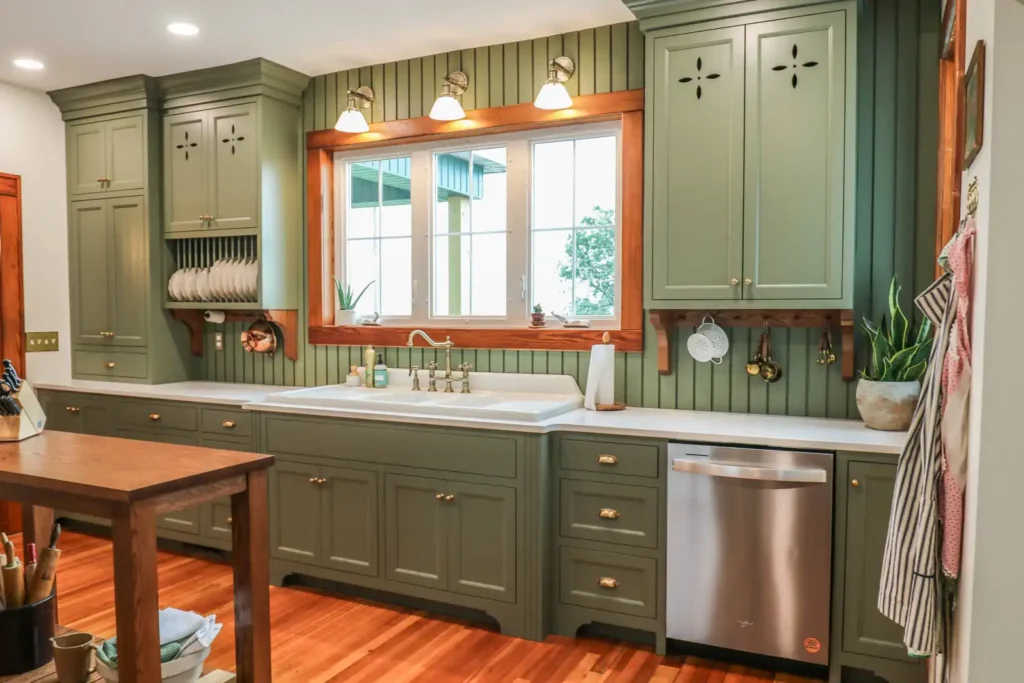
To add contrast to your home, try making selections that differ from one another on one of the features listed above while perhaps keeping the other two similar. For example, in a kitchen, keep the same cabinet style throughout, but switch up the color on the uppers versus the lowers. You could experiment with contrasting forms by taking an otherwise clean-cut, geometric layout and adding organic shapes through seating or decor.
Emphasis
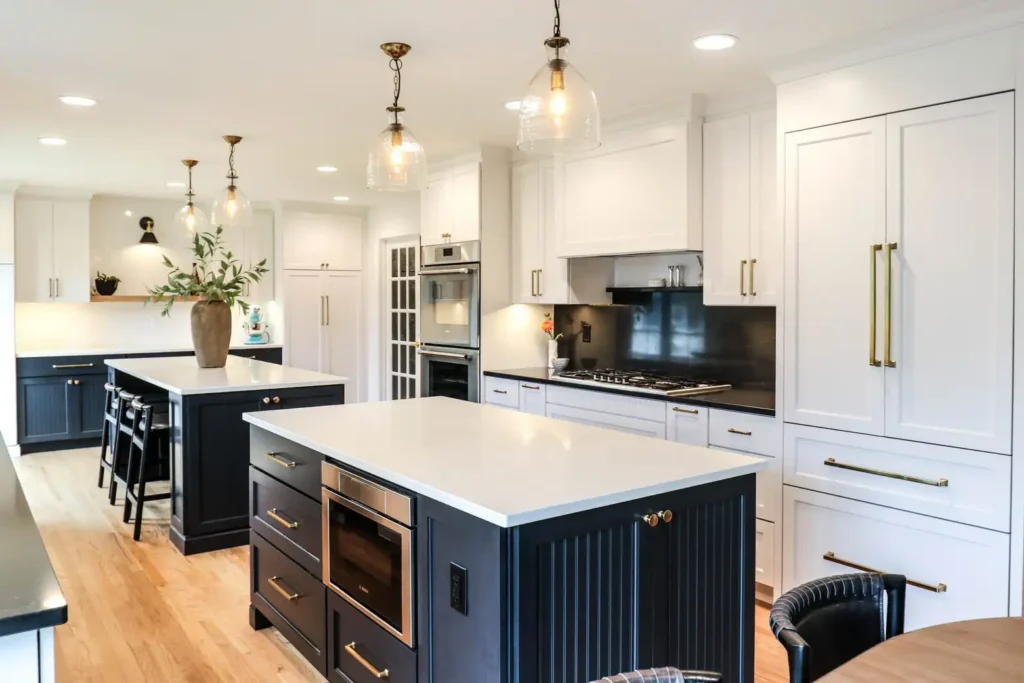
Emphasis is all about creating a focal point, something that draws your attention in and captures your focus. Think a gorgeous chandelier in an entryway, a custom range hood in a kitchen, an unobstructed walk-in shower with a bold material on the walls. Something about having a “centerpiece” so to speak can ground a space.
There are many ways to create emphasis depending on the room. To determine where to add emphasis, however, consider where you would want to draw attention to and go from there. More often than not, you’ll want it to be more of a central point within the space that can be easily seen, not hidden. This could be a stone fireplace that rises to ceiling or an eye-catching art piece above an otherwise empty wall.
Proportion & Scale
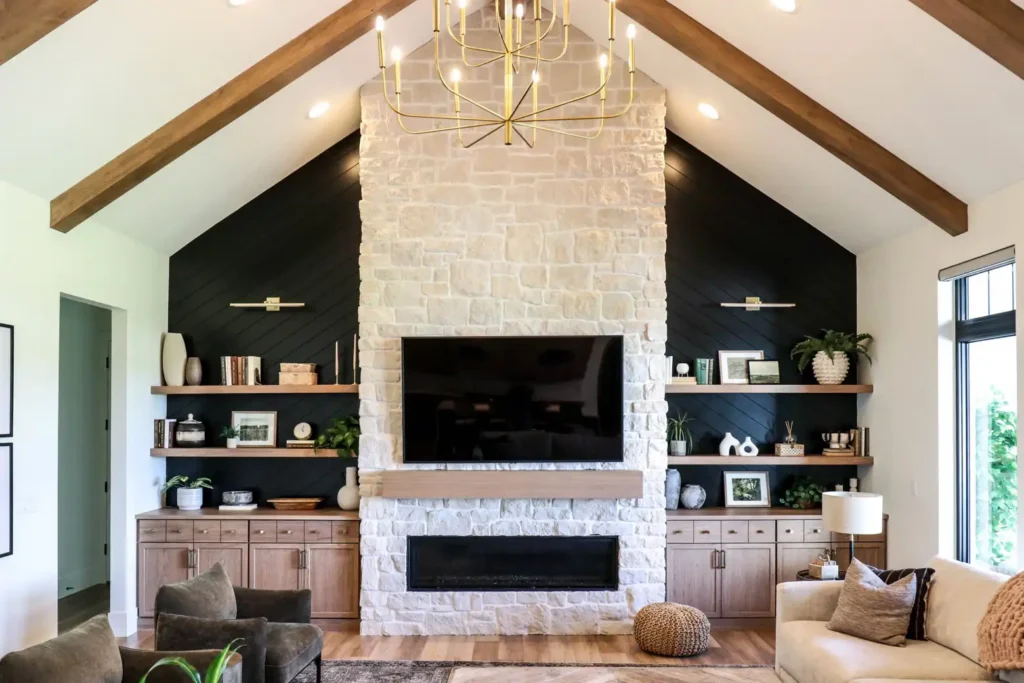
Proportion and scale refer to the size relationships between different elements in a room. You’ll start to consider scale when deciding what size frames would look best above the couch, for example. The key is to consider how the size of one object may relate to another, and how we can play with that in order to create a dynamic design. Essentially, you don’t want everything on a shelf to be the exact same height and width, as that makes for a boring visual. Instead, you’d want to pair together objects of varying scales to create a better sense of proportion.
This design principle isn’t just about decor, though. Consider furniture, for example, and the relationship between a couch and a chair or a coffee table. What size side tables would look best next to a large, grand bed frame? In terms of kitchen design, one way our designers use this principle is creating hardware plans. Instead of using the same size hardware on every cabinet door and drawer, the size might vary depending on the dimensions of the cabinetry. Designers often use a ratio to determine the hardware size, so as the cabinetry dimensions change, so might the length of hardware. Mixing up the size of the hardware proportional to the cabinetry creates a more dynamic look.
Rhythm
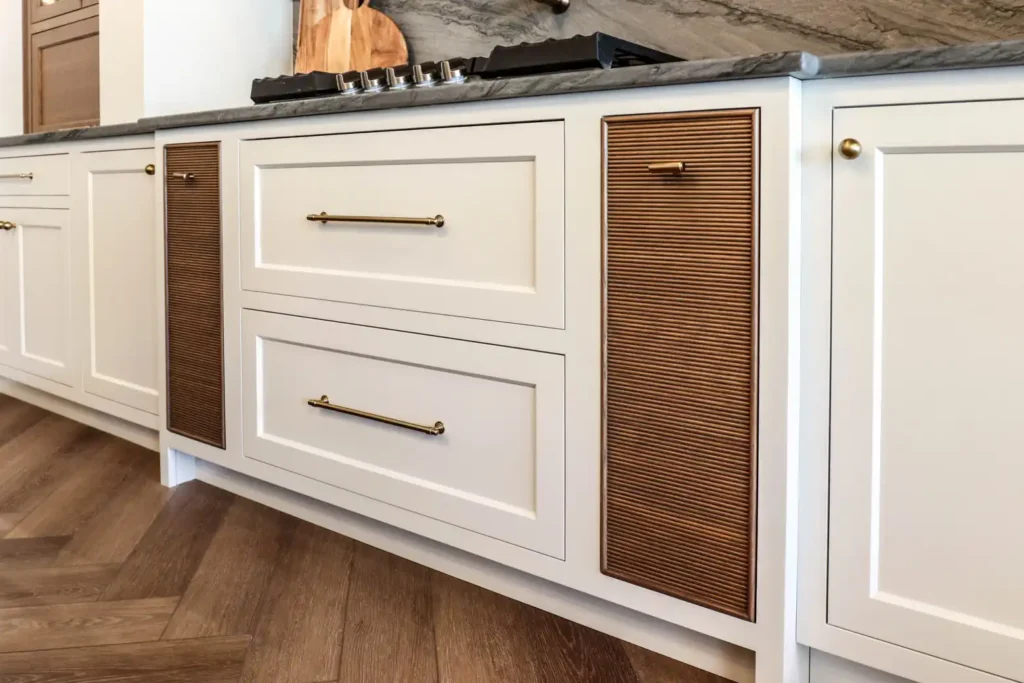
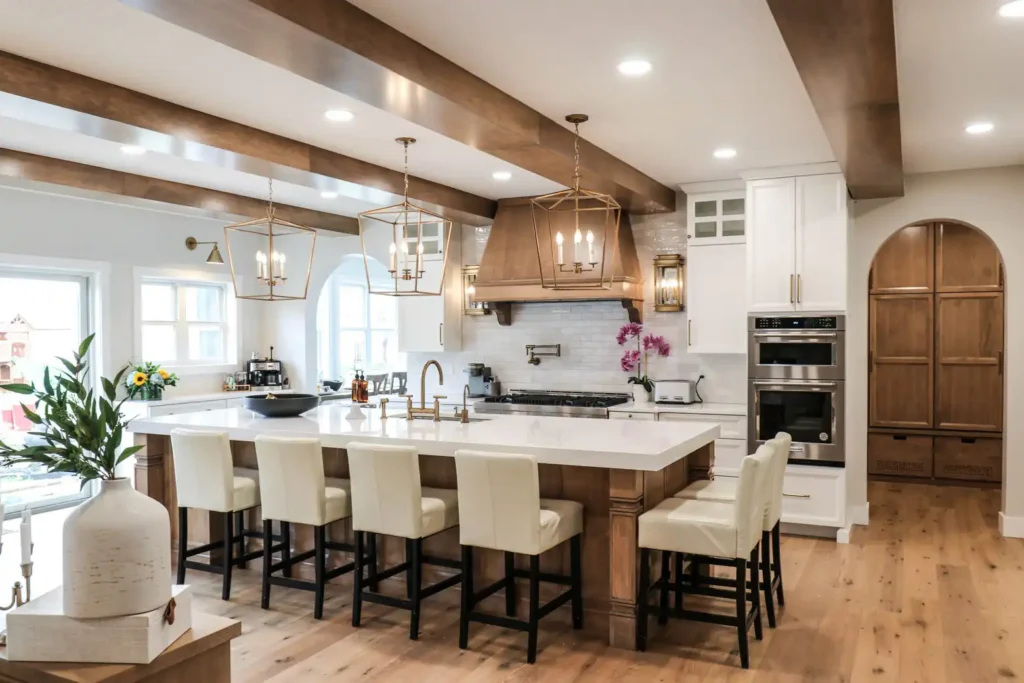
A sense of rhythm in a room is established by a sort of repetition that guides your eyes through the space. You can create rhythm in various ways, including color, pattern, or shape. When executed well, you’re left with a satisfying expectation of order. You might see rhythm through ceiling beams that are evenly spaced in sequence or touches of wood sprinkled throughout an otherwise painted kitchen design.
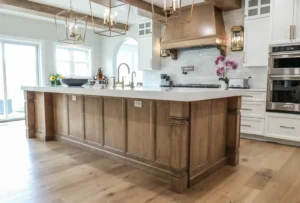
When considering rhythm in your home, think about what element could be intentionally repeated to create a sense of visual order. This could be done architecturally through wall molding or wainscoting, for example. In a kitchen, layering pendent lights over an island can create a sense of rhythm for the space.
Harmony & Unity
A harmonious home is one that is connected thoughtfully in unity. Think of harmony as a sense that everything belongs. Have you ever walked through someone’s home and just felt that even though each room is different, it’s all giving off the same personality? That’s essentially the goal!
Harmony/unity can be achieved through making selections that are in some way connected, either by theme, color scheme, material, etc. You may have heard designers talk about design styles, like organic modern, rustic chic, or traditional. Going into designing a home with a consistent style in mind helps create harmony without simply repeating the exact same design choices throughout every room. Even if you don’t have a super nailed-down design style, even choosing a color scheme could be a way to create unity. Whether it’s keeping a whole home neutral colored with natural materials or choosing artwork and decor that fits into a designated selection of colors within a living room, these are examples of unified design. For more advice on digging into your design style, check out this post: