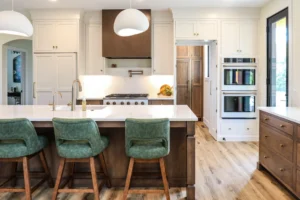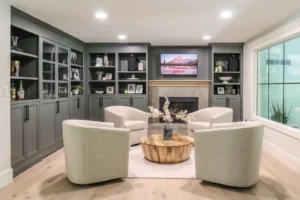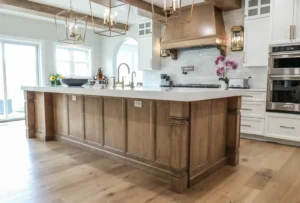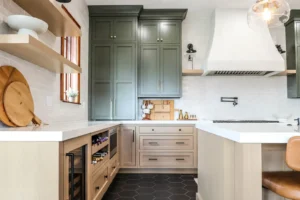
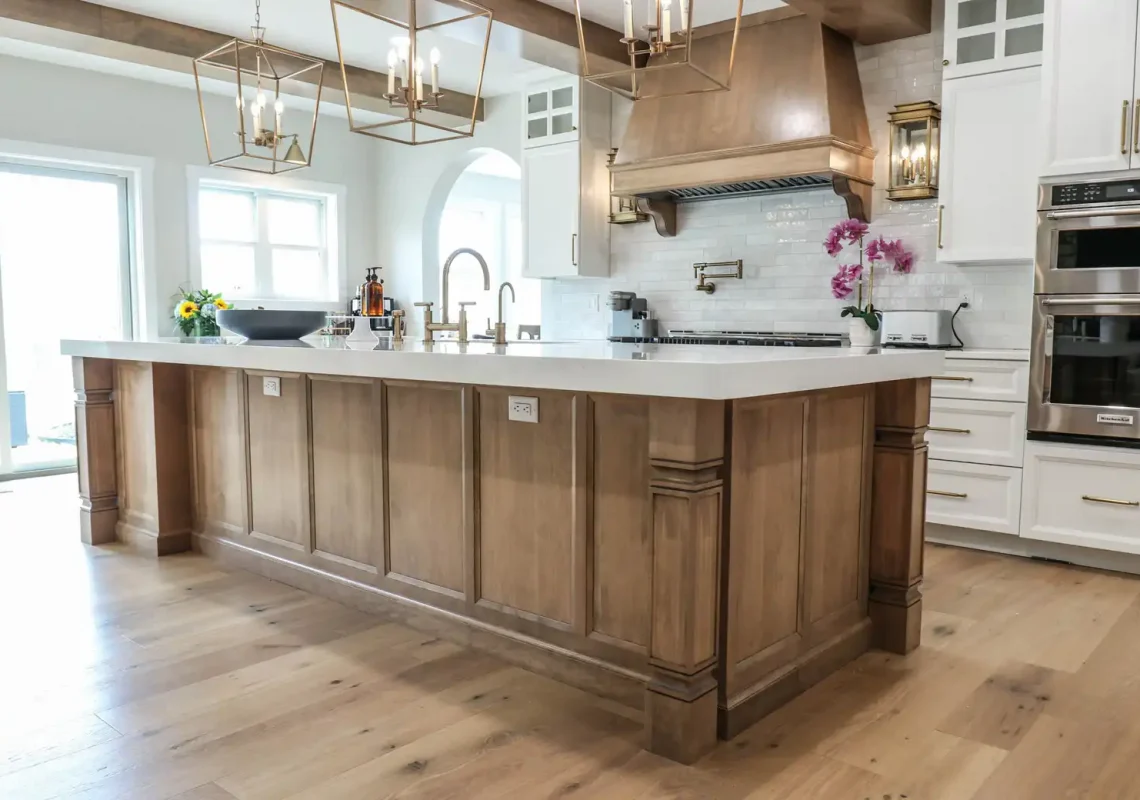
Ever since the kitchen island became the standard over peninsulas (originating from the shift to more open-concept floor plans), it has become a major feature in setting the tone for a kitchen design. Without the need for the prep space to connect to existing cabinetry or walls, you have a bit more design freedom in terms of the style, color, and execution of this popular kitchen element.
A few things to consider before planning your kitchen island design: First off, including a kitchen island over a peninsula usually requires a bit more square footage. So, make sure your space allows for that. Next, think about how you plan to use your kitchen island. Will this be a space to gather, will you need seating, and how much? Are you hoping to maximize the storage potential within your island or are you wanting to prioritize design style over functionality? It’s good to have some answers to these questions before looking at design inspiration, as each design may accomplish different goals.
When it comes to custom cabinetry, the potential to customize features to fit your wants and needs is essentially limitless. As you take in some of our favorite kitchen island designs, remember that you can mix and match ideas to get exactly what you want!
Here are a few ways to make your kitchen island stand out:
Color Switch
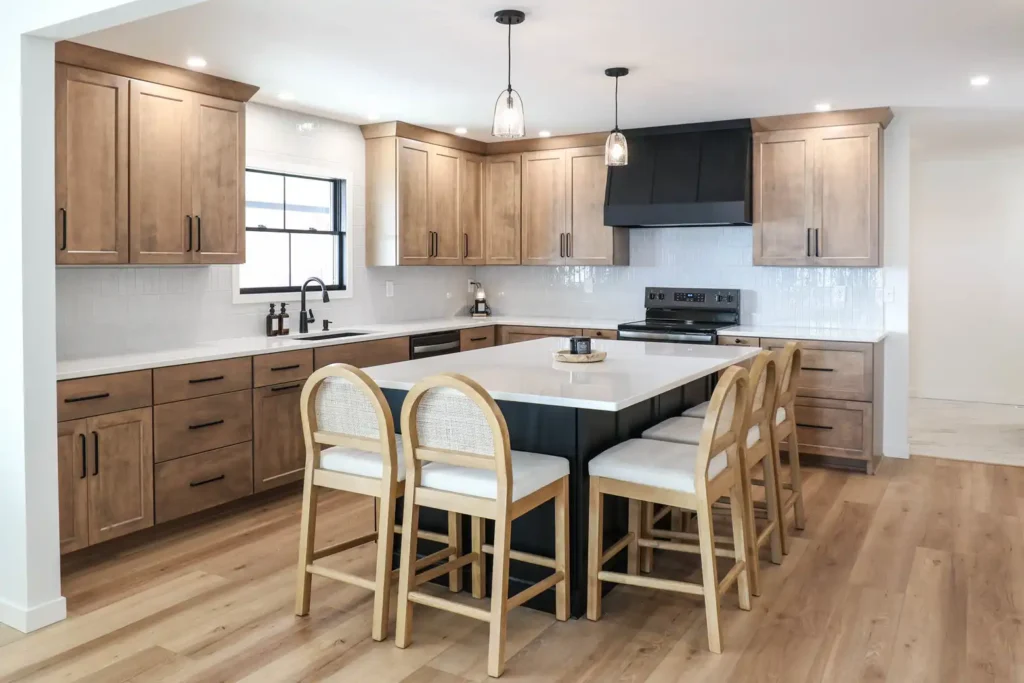
Perhaps the most obvious way to set your kitchen island apart from the perimeter cabinetry is to change up the color or finish. Your island can draw attention by being a cozy wood finish in an otherwise painted kitchen, or you can switch up the paint color to something eye-catching. Contrasting the color/finish from the rest of the space will automatically make the island stand out.

Custom Island Legs
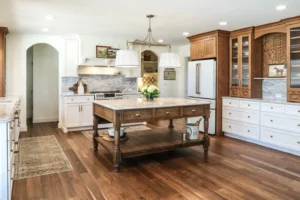
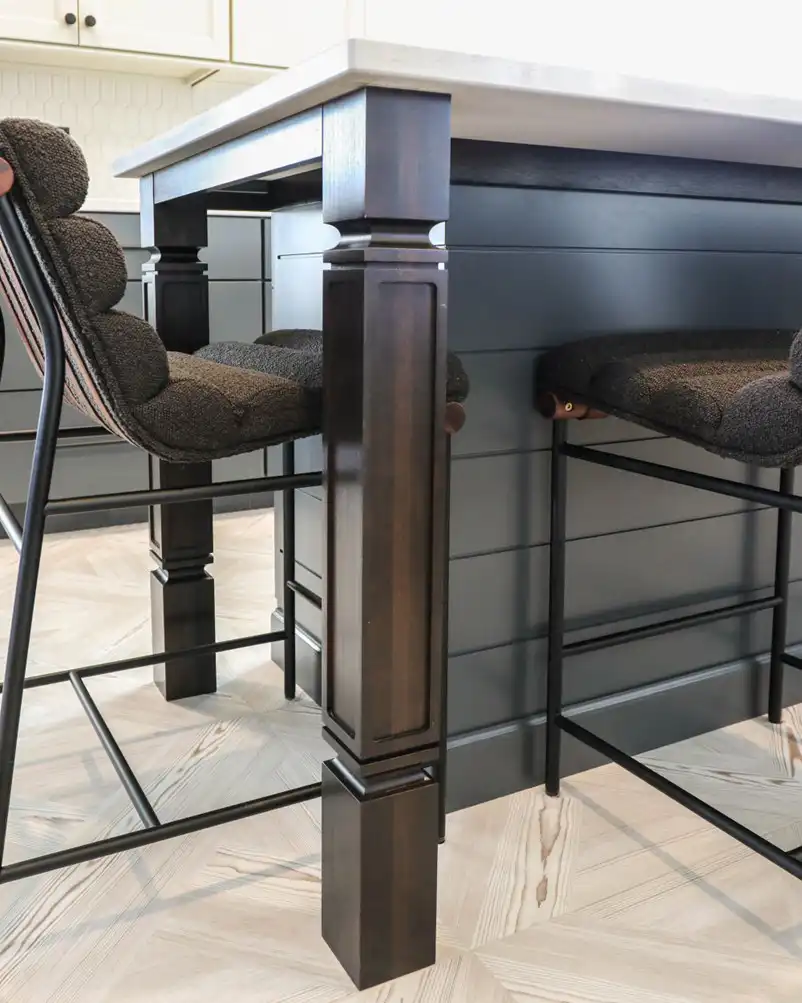
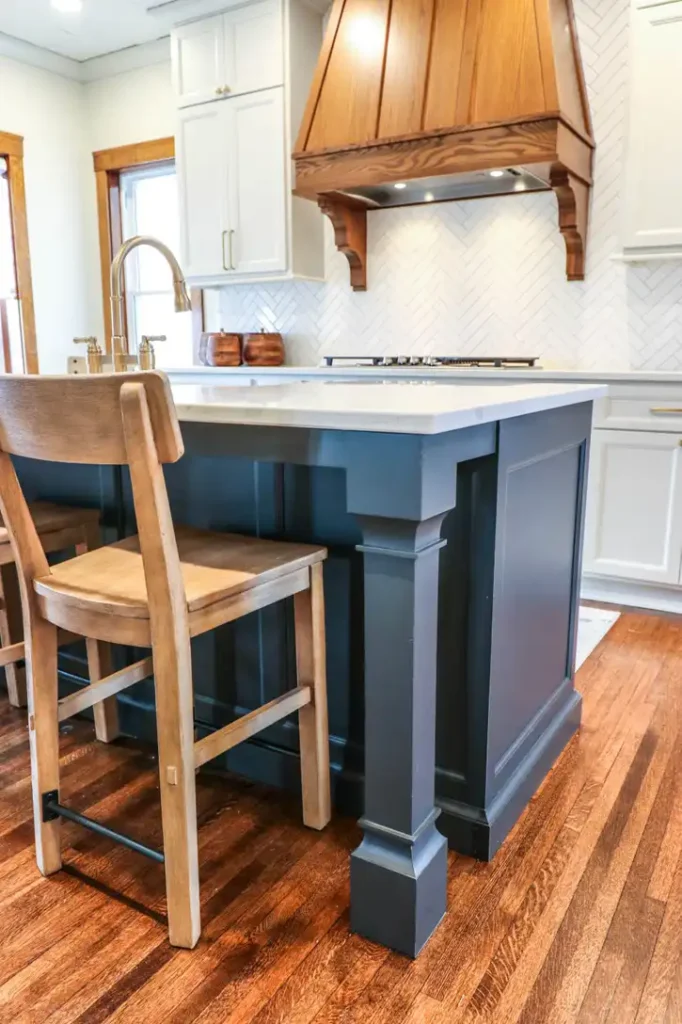
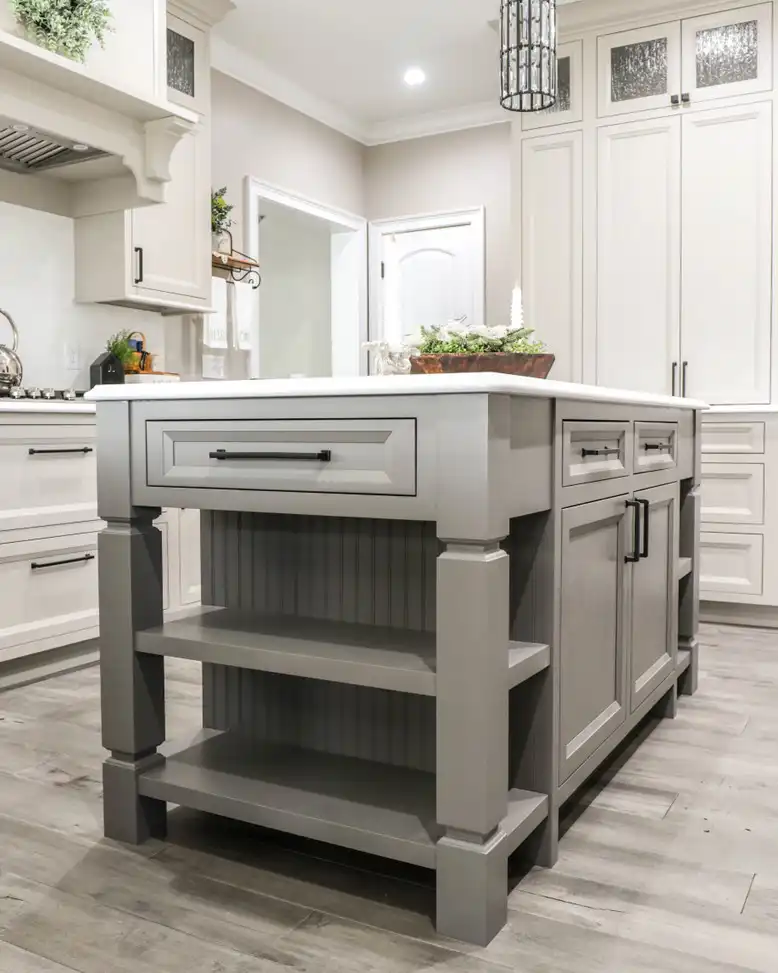
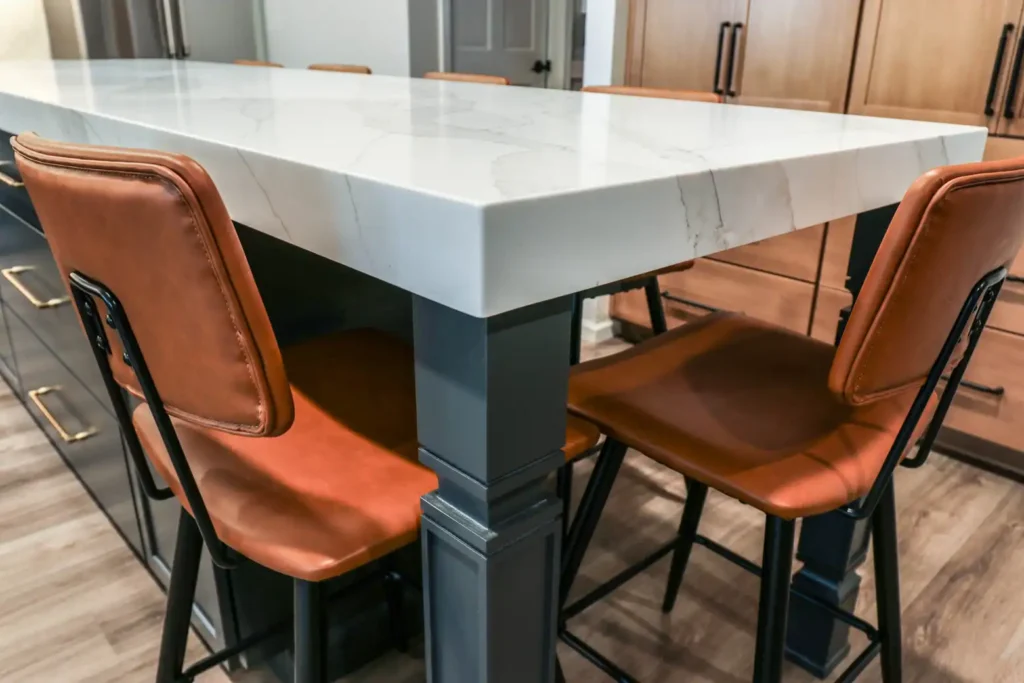
Great design is all in the details, and custom island legs is one of our favorite ways to add personality to the cabinetry. Whether it’s unexpectedly bold and sturdy, or dainty and decorative, you can play with the style to set the tone you’re looking for. This is a great design option for those hoping to incorporate seating at the island, as it typically leaves a lot of leg room.
Furniture Style
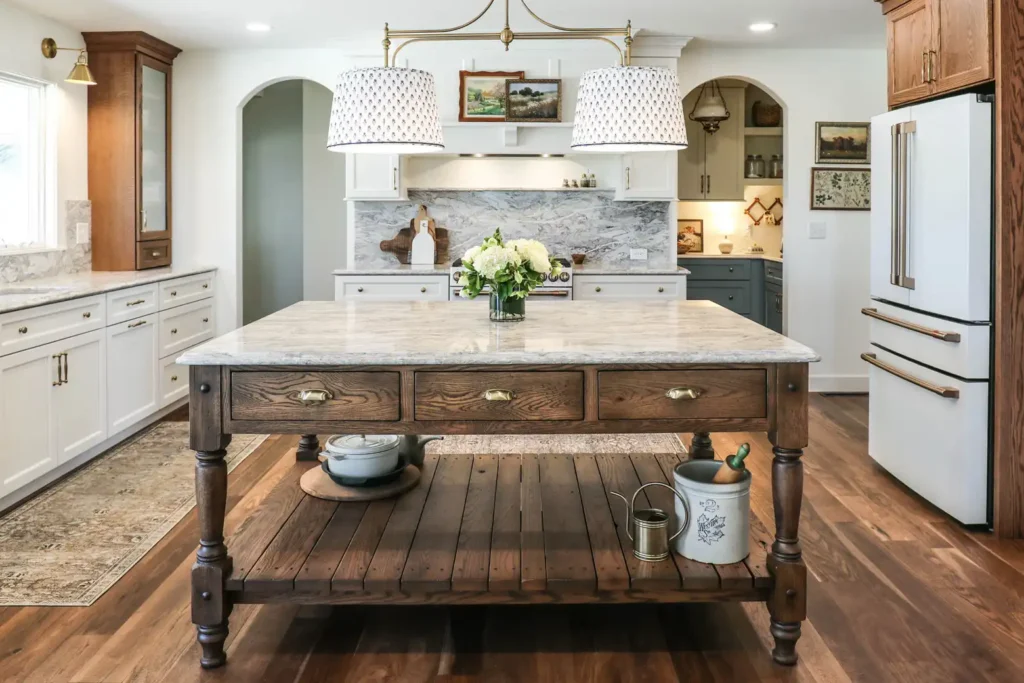
If you like the idea of decorative legs, you can lean even further into a furniture-style kitchen island. “Furniture-style” essentially means that the design of the island mimics the look of a furniture piece rather than kitchen cabinetry. This may mean less practicality in some cases, but more options to get creative with design. Furniture-style can end up being a combination of several of these ideas, with the goal being to create a unique design feature above all else.
Stylish Shelving
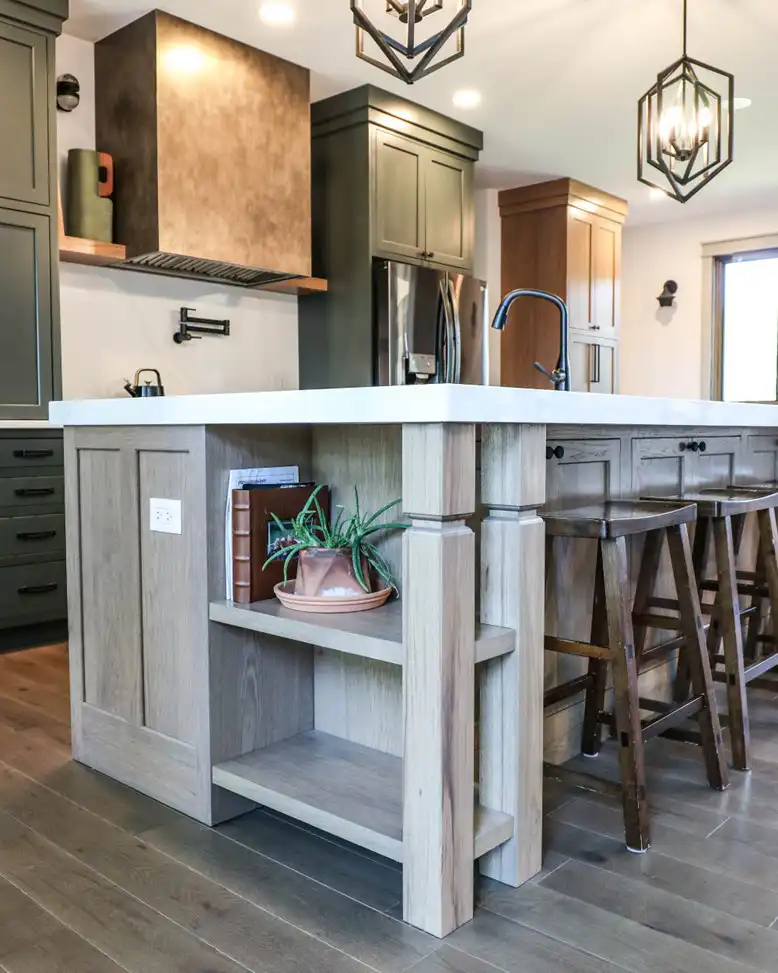
Piggybacking off furniture-style, you might consider adding rows of shelving to one side, similar to bookcases, to store cookbooks, stylish tableware, or decorative trinkets. This works especially well if the layout of your kitchen leaves one side of the island more visible, providing a space to add some visual interest. It can also be a very practical solution if you use the shelving to store frequently used items.
Storage Features
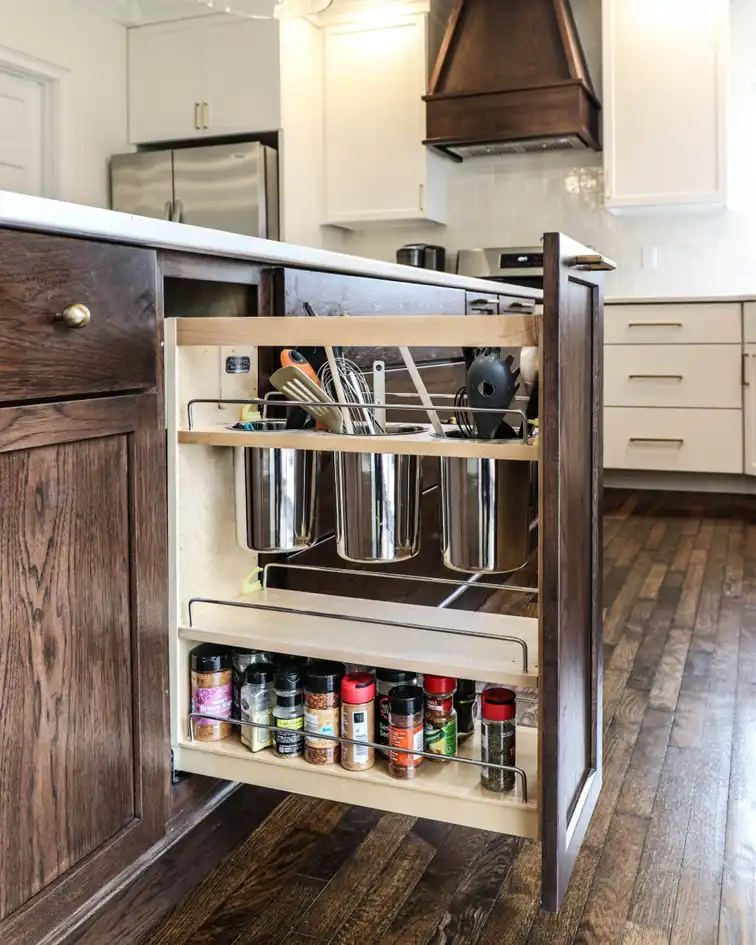
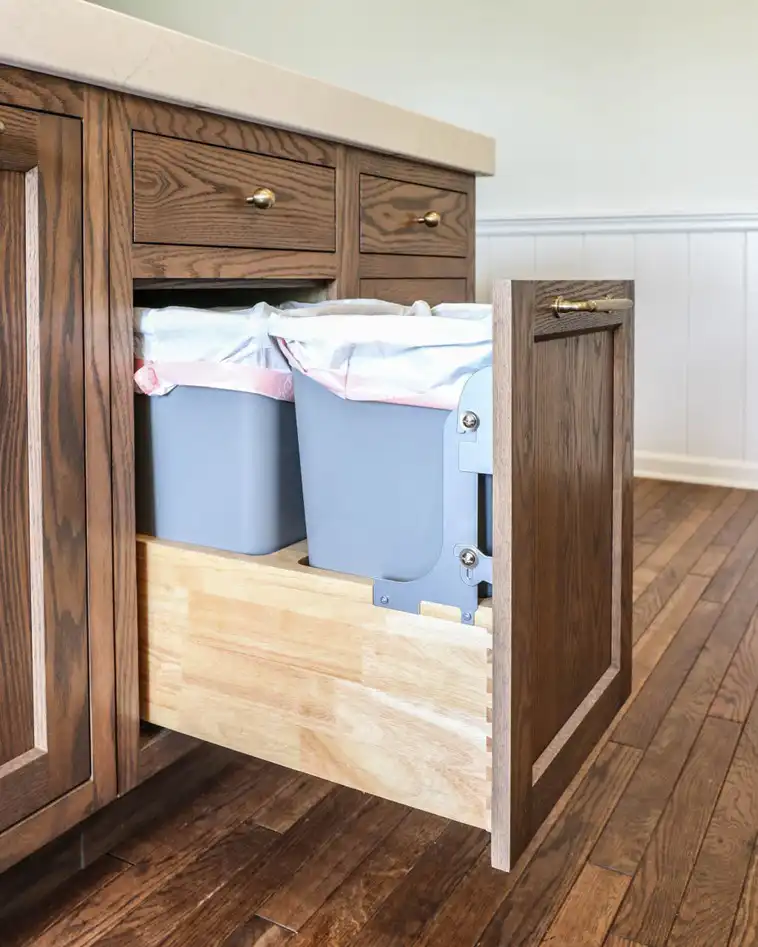
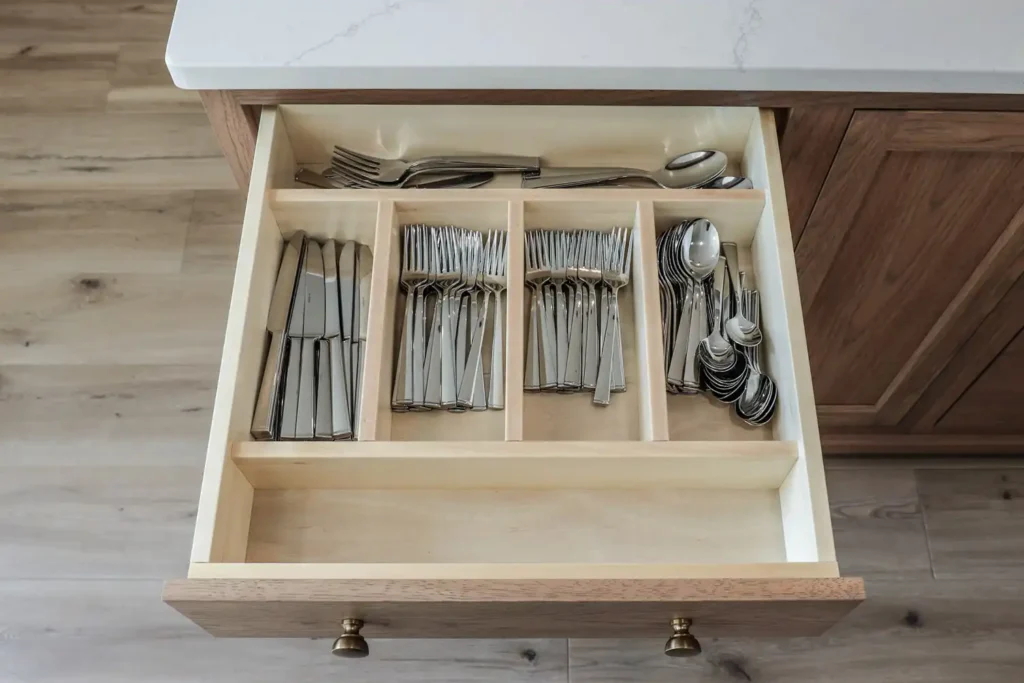
If you’re wanting to maximize functionality with your kitchen island, there’s tons of custom storage features and inserts you can include that may not be as eye-catching right away but are sure to impress any guests that explore further. Features like utensil rollouts, spice drawers, cutting board cabinets, trash rollouts, etc., give your kitchen a custom touch that will make your kitchen feel more organized and efficient. When everything has a place, it likely means less clutter on your countertops, which does actually aid in the overall look of your kitchen.
Custom Countertops
Speaking of countertops, the kitchen island provides a unique opportunity to get a little more creative with your countertop material. For example, a drop miter edge adds a little drama, making the countertop appear thicker and more prominent. Take it a step further with a waterfall edge that spills over the side of the island, adding a strikingly bold characteristic that is sure to draw attention.


Decorative Paneled End
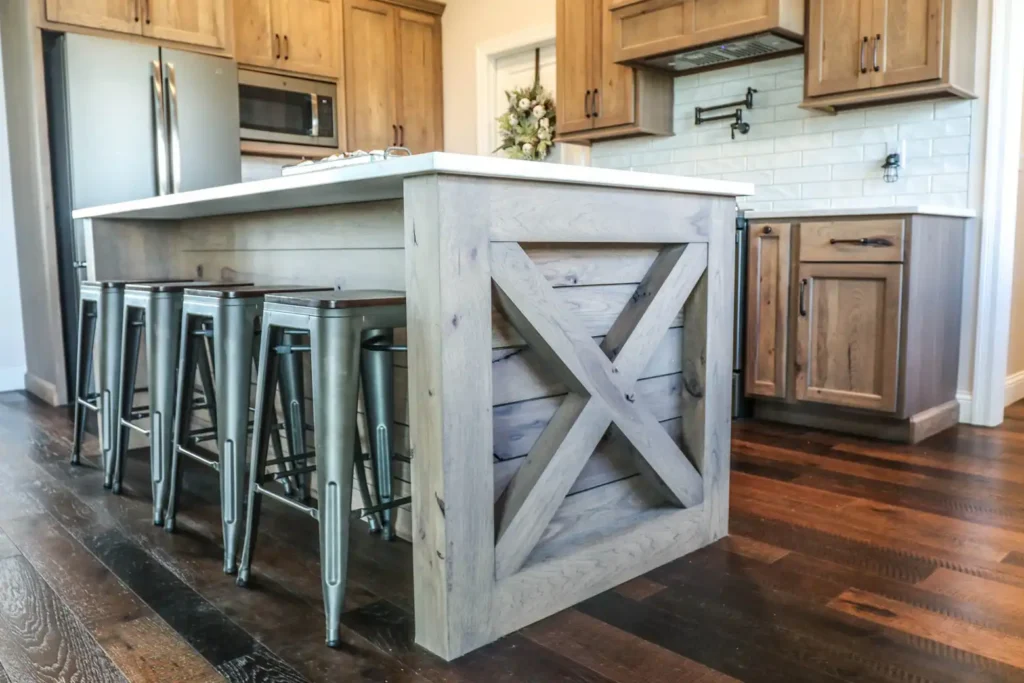
If a waterfall edge isn’t for you but you do like the idea of dressing up the sides of your cabinetry, consider custom paneled ends. Depending on your style, you can use this space to incorporate more woodwork and add extra visual interest.

Textured Cabinetry
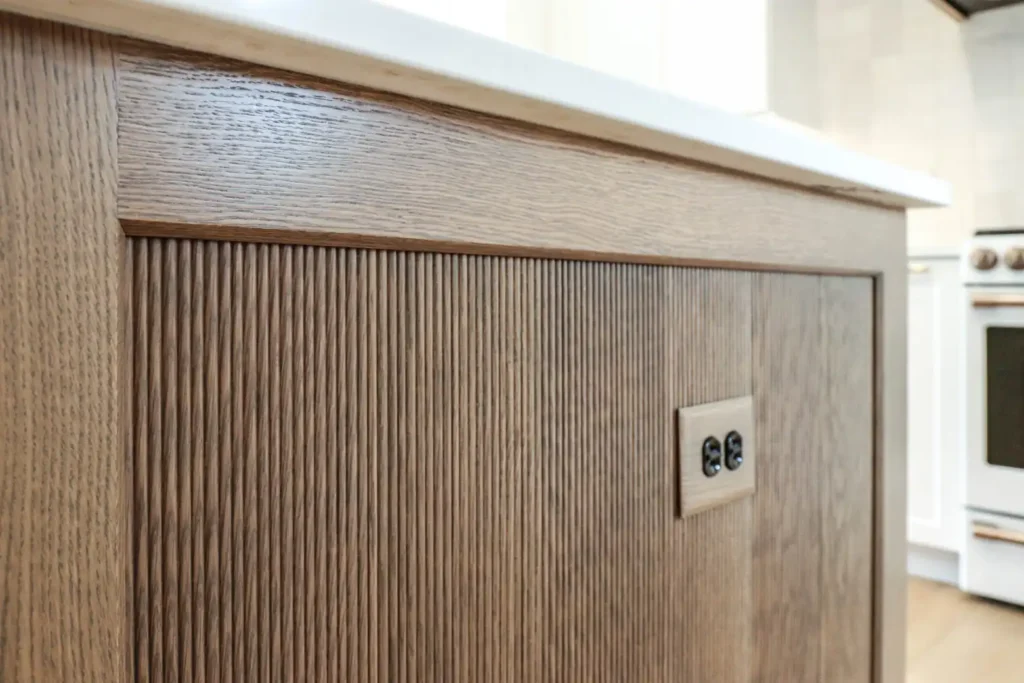
Another option is to add texture through reeded or fluted cabinetry. Reeded cabinetry feature grooves that are raised outward, whereas fluted grooves are concaved inward. This can be done either on end panels or on the doors and drawers. Beadboard is another option to add visual texture. Best to view samples of each of these styles to determine which you like best!

Rounded Island
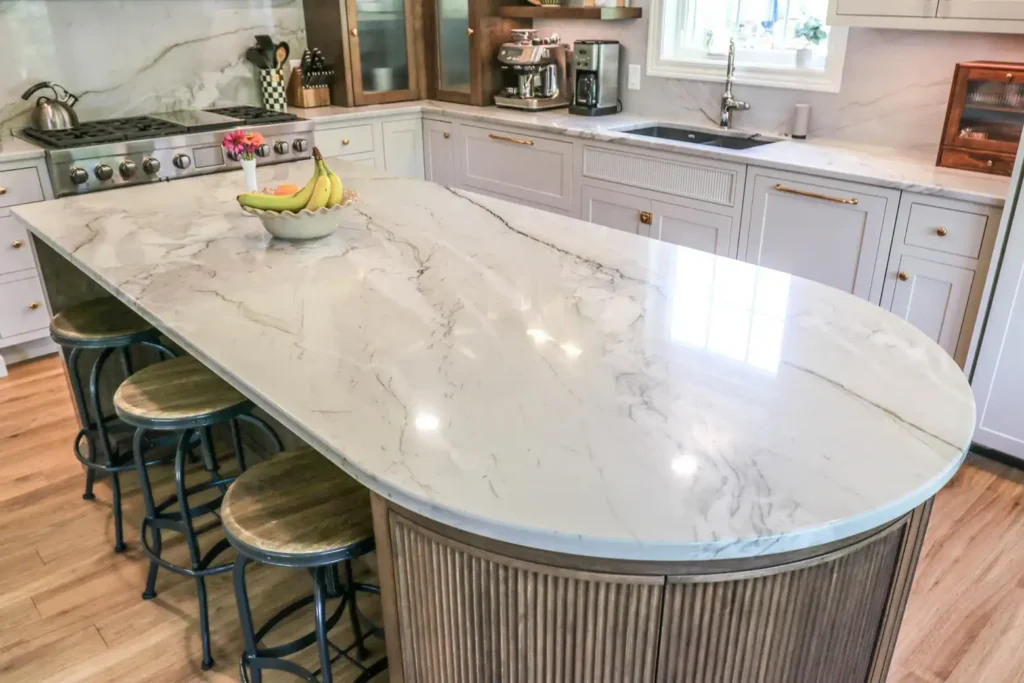
Lastly, we’ve seen a surge of more organic shapes and curves filling interiors. A perhaps unconventional idea (that we absolutely love!) is a rounded island. Taking the idea of archways and organic modern furniture but putting that energy into your kitchen island design. We love this idea because it’s unique, interesting, and gives a totally custom look.

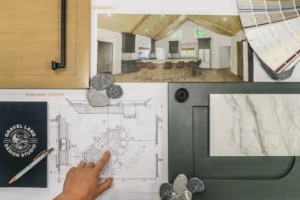
If you love the idea of customizing your kitchen cabinetry, you’re going to love working with us at Gravel Lane Design. We specialize in custom cabinetry and one-on-one design services, prioritizing a comfortable client experience with excellent results. If you’re ready to start designing your custom kitchen together, fill out our contact form to get paired with one of our expert designers.